

Description
Hyaluronsan
Hyaluronic Acid (Hyaluronsan) is a high–molecular weight hyaluronic acid (1,200–2,200 kDa) produced through a biofermentation process by Kewpie Corporation, Japan. It is manufactured under ECOCERT-certified standards and is entirely free from animal-derived ingredients.
This product is designed to form a thin film on the outermost layer of the skin, helping to retain moisture for an extended period while providing a smooth, non-sticky feel. It is ideal for individuals seeking long-lasting hydration, radiance, and a plump, healthy-looking complexion.
| Subject | Description |
|---|---|
| Appearance | White powder |
| pH | 6.0 ~ 7.0 |
| Active ingredients | -Nitrogen 3.0 ~ 4.0 % -Glucuronic Acid 40.0 ~ 50.0 % |
| Applications | Cosmetic products |
| Suggested Concentration | 0.05%–0.2% |
| Function | Moisturizer, Anti-aging |
| INCI Name | Sodium Hyaluronate |
| Storage conditions | N/A |
| Shelf-Life | 18 months from the manufacturing date. |
With its large molecular weight of 1,200–2,200 kDa, Hyaluronsan HA-LQH functions differently from conventional hyaluronic acid. Instead of penetrating deeply, it remains on the skin’s surface to form a protective film that attracts moisture from the environment and prevents transepidermal water loss.
It is produced using a specialized microbial fermentation technology, resulting in a highly pure and safer ingredient compared to traditional extraction methods. Another key advantage is its excellent handling properties—it dissolves easily without requiring vigorous mixing, does not disperse into the air during formulation, and remains stable even under heat or varying pH conditions.
This makes Hyaluronsan HA-LQH one of the top choices for developing all types of skincare formulations.
Mechanism of Action and Benefits
Active Ingredient: Sodium Hyaluronate
Chemical Structure: Sodium Hyaluronate is the sodium salt of hyaluronic acid, composed of long polymer chains made of repeating units of Glucuronic Acid (40–50%) and N-acetylglucosamine (containing 3–4% nitrogen). These units are linked together by specialized chemical bonds, giving the ingredient a high molecular weight of 1,200–2,200 kDa.
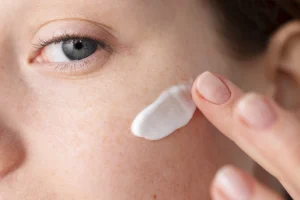
-
Moisture Retention on the Skin (Surface Hydration):
When applied to the skin, high–molecular weight Sodium Hyaluronate forms a thin film on the outermost layer, acting like an adhesive layer that attracts moisture from the air and reduces water evaporation from the skin.High Water-Holding Capacity:
The structure of Sodium Hyaluronate contains abundant hydroxyl (-OH) and carboxyl (-COO-) groups, enabling it to absorb several hundred times its own weight in water. It functions like a microscopic sponge that traps and retains moisture on the skin.Formation of a Protective Barrier:
The thin film formed on the skin helps minimize moisture loss while protecting the skin from pollutants and impurities, allowing long-lasting hydration.Benefits for Use:
-
Provides immediate hydration to the skin
-
Helps the skin appear plump, soft, and radiant
-
Reduces skin roughness
-
Suitable for all types of skincare products such as lotions, serums, creams, and masks
Summary of Research Findings from the Manufacturer — Kewpie Corporation
Skin Adhesion Test (Moisture Retention Ability)
Method:
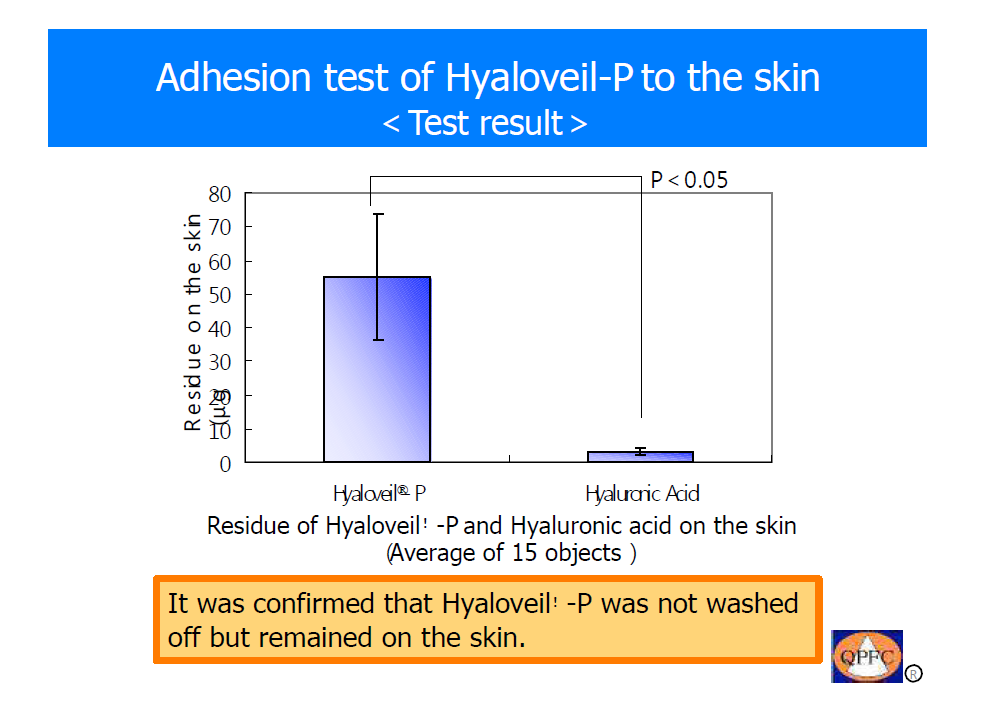
A test was conducted on 15 volunteers by applying a 1% solution of Hyaluronsan HA-LQH and a 1% solution of standard Hyaluronic Acid onto the skin of the forearm. The samples were left for 3 minutes and then rinsed with running water. Adhesive tape was then applied to the tested area and peeled off to collect the remaining Hyaluronic Acid on the skin. The amount retained on the skin was analyzed using HPLC.Results:
-
Hyaluronsan HA-LQH: Average remaining amount on skin = 68 μg
-
Standard Hyaluronic Acid: Average remaining amount on skin = 12 μg
-
The difference was statistically significant (P < 0.05)

Research Conclusion
-
Hyaluronsan HA-LQH adheres to the skin 5–6 times more effectively than standard Hyaluronic Acid. Even after rinsing with water, a significantly higher amount of the ingredient remains on the skin.
-
Its high molecular weight (1,200–2,200 kDa) enables the formation of a superior protective film on the skin surface compared to regular Hyaluronic Acid.
-
Enhanced moisture retention efficiency: The adherent film helps lock in moisture, allowing the skin to stay hydrated for a longer and more continuous period.
-
Research Study
Studies on high–molecular weight Sodium Hyaluronate have been published in several international cosmetic science journals. Research from the Department of Dermatology, Seoul National University Hospital found that high–molecular weight hyaluronic acid (greater than 1,000 kDa) provides superior hydration to the outermost skin layer compared to lower molecular weights. This occurs through a film-forming mechanism, which significantly reduces transepidermal water loss (TEWL). The study also reported that hyaluronic acid produced through a fermentation process offers higher purity, greater safety, and a lower risk of irritation compared to animal-derived sources.
ReferencePavicic, T., et al. “Efficacy of cream-based novel formulations of hyaluronic acid of different molecular weights in anti-wrinkle treatment.” Journal of Drugs in Dermatology, 2011, 10(9): 990-1000.
Reference
Ito, M. et al. (2020). “Effects of D-Amino Acids on Human Epidermal Cells” Journal of Dermatological Science.
Product Safety and Warranty Information
- The product is manufactured through a certified process by leading organizations and has certification for industry standards that can be referenced.
-
The product is safe and can be used to support the registration of a cosmetic product.
- The product is a raw material for industrial use, not a finished product. Users must have the knowledge and appropriate tools for using the raw material.
- The product is warranted according to the specifications, please refer to the terms and conditions for details.
-